All Categories
Featured
Table of Contents
The vacancy-to-unemployment ratio offers a helpful lens here (figure B). While the labour market has cooled considerably from the exceptional tightness of 2021-22, vacancies have more recently stabilised even as unemployment has actually continued to edge up. This pattern suggests that the modification in the labour market is increasingly occurring through slower hiring and weaker task matching.

While our main forecast does not presume such a shift, this is an important risk that we are monitoring carefully. Proof from business studies suggests AI is currently being utilized generally to enhance specific jobs especially in administrative, analytical and customer-facing functions instead of to drive massive workforce reductions. Documented efficiency gains have actually so far been focused in narrow functions, with restricted instant effect on total employment.
For the Monetary Policy Committee, the crucial judgement is how quickly increasing joblessness translates into lower wage growth and services inflation. While we expect Bank Rate to be up to 3.25 percent by year-end, consistent wage pressures provide a danger to this view. For the public financial resources, slower work growth and weaker incomes dynamics would minimize income tax and National Insurance coverage receipts.
The UK economy will grow more slowly next year than any other significant sophisticated country as taxes and high rates of interest take their toll, according to the most current forecasts from the OECD. In a bleak outlook, the Organisation for Economic Co-operation and Development reduced its forecast for UK growth from 0.7 percent to 0.4 per cent, the most affordable in the G7 apart from Germany.
In 2025, it predicts that the UK will grow by 1 per cent the weakest efficiency in the G7. By contrast, the United States economy is forecasted to power ahead this year with 2.6 percent development, followed by Canada at 1 per cent, and Italy and France at 0.7 per cent.
How Digital Transformation Reshapes Operations for 2026
German financial growth is anticipated to increase from 0.2 percent this year to 1.1 percent next year, which will see it leapfrog Britain. The OECD outlook is more pessimistic than that released by the International Monetary Fund (IMF) previously this year, which anticipate UK growth of 1.5 percent.
The Paris-based OECD made up of 38 countries stated the British economy would be "slow" as a result of the succession of rate of interest increases in the UK. Rates of interest required to stay high in order to deal with sticky inflation, it stated. "The financial and financial policy mix is adequately restrictive and ought to stay so till inflation returns durably to target (2%)," the OECD's UK financial outlook for 2024 found.
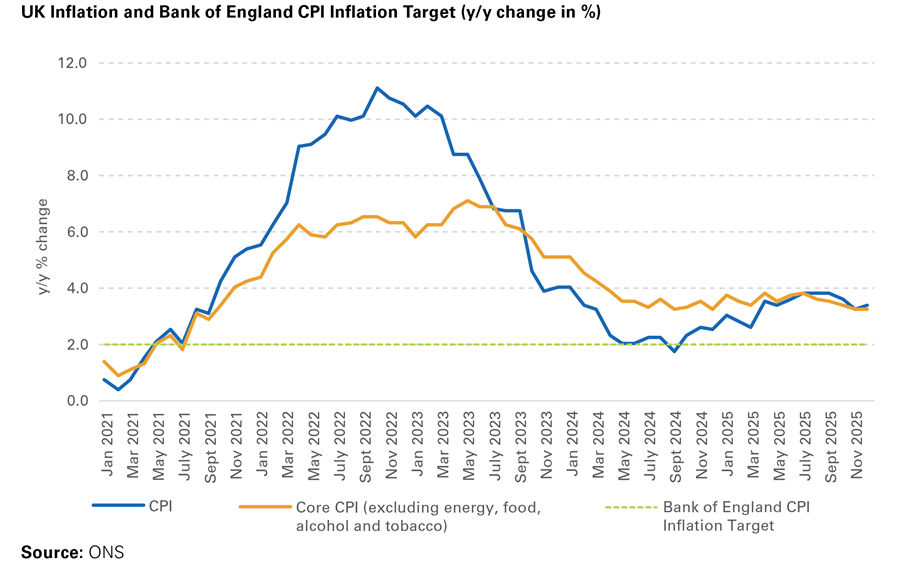
What Sets Apart one of the most Successful 2026 British CEOs?The OECD anticipates eurozone inflation currently 2.4 percent will be significantly lower than UK inflation presently 3.2 percent over the very same period. The think tank stated "fiscal prudence" is needed until the Bank of England's inflation target of 2 per cent is fulfilled, and that federal government spending should be directed towards "supply-enhancing investment" such as the NHS.
Modern Banking Strategies for UK Growth Markets
The joblessness rate increased to 4.2 percent for the most recent three-month period to February. The OECD anticipates this will continue to increase, reaching as high as 4.7 per cent in 2025 "as the labour market cools". Chancellor Jeremy Hunt said the OECD projection was unsurprising offered "our concern for the in 2015 has actually been to tackle inflation with higher rates of interest.
Get most current updates and insights provided to your inbox.
The International Monetary Fund raised its development forecast for Britain's economy this year on Monday (May 18) however cautioned that more "domestic uncertainty", at a time when political instability is swallowing up the government, might hit costs and financial investment. In an upgrade that finance minister Rachel Reeves hailed as an indication of progress by embattled Prime Minister Keir Starmer's government, the IMF said Britain's economy would grow by 1.0 per cent this year.
It would still represent a slowdown for Britain from 2025." While the UK economy has stayed resistant over the last few years, the war in the Middle East is moistening near-term prospects," the IMF said in its yearly evaluation of Britain's economy. The brand-new, higher forecast for 2026 was because of pre-war economic momentum which was shown in current stronger-than-expected growth and revisions to previous information, the Fund stated.
Professional Leadership Insights for Agile Enterprise Success
However, given the unpredictability about the Iran conflict, the BOE might have to cut or raise rates and must "be prepared to react powerfully" if second-round impacts such as worker needs for greater pay or companies raising their selling rates proved more powerful than prepared for. Over the previous two weeks, British politics has actually been rocked by speculation about Starmer's future, driving benchmark 10-year loaning costs to their greatest because 2008 on Friday on the possibility of weaker fiscal discipline.

Latest Posts
Reviewing New 2026 UK Market Trends for Business
Optimizing Talent Across UK Firms
Optimizing Mid-Market Talent Strategies in 2026